
Is a refurbished phone safe? What actually matters before you buy
Yes, and often it's safer than buying new. The safety comes almost entirely from who you buy from. Here are the four things that actually matter before you buy.
By the Savvoo desk · · 12 min read
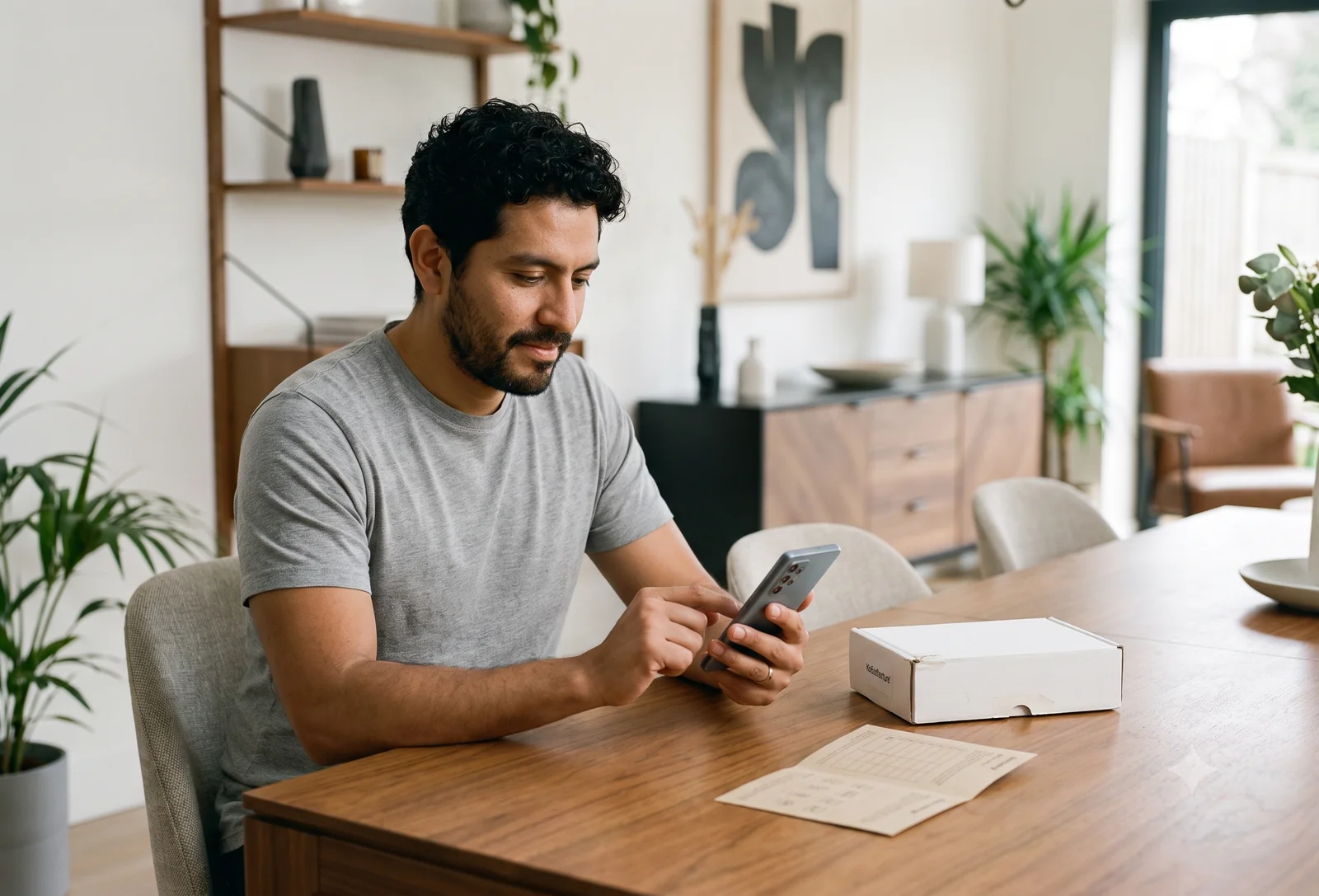
Yes. In most cases a refurbished phone is not just safe, it's safer than buying new. That sounds backwards, so here's why it's true.
When a phone is made new, it's one of millions coming off a line. Quality control is real, but it works by sampling: the factory checks a phone here and there and trusts the rest of the batch to match. When a certified reseller refurbishes a phone, the opposite happens. Someone takes your specific phone, wipes it completely, reinstalls clean software, and runs it through a checklist of up to 100 individual tests before it's allowed to be sold. Your phone, not a sample standing in for it.
So the honest answer to "is it safe?" is yes, with one caveat that matters: "refurbished" isn't a protected word, and the safety comes almost entirely from who you buy from. A phone reconditioned by a reputable seller is a checked, warrantied, known quantity. A phone described as "refurbished" by a stranger on a marketplace is just a used phone with a nicer label. Same word, completely different risk. This guide is about telling them apart.
We'll be straight about the rare bad cases too, because you've probably read a horror story. They exist. They're just far less common than the worry suggests, and they're avoidable once you know what to check.
First, what "refurbished" actually means (and what it doesn't)
Here's the thing most people don't realize: no rulebook defines "refurbished." No regulator polices the word. One seller's "refurbished" means a 60-point inspection, a new battery, and a year's warranty. Another's means they turned it on, saw it worked, and wiped it with a cloth. (If you want the full breakdown of refurbished versus used versus open box, our [refurbished explainer] covers it.)
That's not a reason to avoid refurbished phones. It's the reason the seller matters more than the label. The grade on the listing (Excellent, Good, Fair, or A/B/C depending on the seller) tells you about cosmetic wear, a scuff here, a faint scratch there. It does not tell you how thoroughly the phone was tested. For that, you look at the seller's promises: the checks they run, the warranty they stand behind, the return window they give you. Those are the real signal, and they're what the rest of this guide walks through.
The four things that actually matter
If you check four things before you buy, you've handled almost all of the real risk. Everything else is detail.
1. Is it tested and graded?
A real refurbisher tells you what they checked. Look for a listing that describes an actual process: the screen, the battery, the cameras, the buttons, the speakers, the ports, the wireless. The good sellers publish the number (the best run an inspection of up to 100 points) and often a checklist. The grade itself (Excellent, Good, Fair) is about how the phone looks, not how it works, so don't read a high cosmetic grade as proof it was tested well. The two are separate promises. You want both.
If a listing says nothing about testing at all, that tells you something too. Silence isn't an oversight. It usually means there wasn't a process to describe.
2. Does it come with a warranty and a return window?
This is the one that does the most work, so if you only internalize one check, make it this. A warranty is a seller betting their own money that the phone is fine. The longer the warranty, the bigger the bet, and the more confident they are. A year is strong. Ninety days is normal. Nothing at all is the warning sign.
The return window matters just as much, because it's your safety net for the things a spec sheet can't show: how the battery actually holds up over a few days, whether the screen has a faint mark you only notice in sunlight. A 14 or 30 day window means you can test the phone in your real life and send it back if it's not right. Buy from somewhere with no returns and you've removed your own escape hatch.
One more layer, if you want it: the extended plan. Most good sellers offer a paid protection plan on top of the free warranty that comes with the phone. It's worth understanding the difference. The warranty that comes free covers defects: something was wrong with the phone, and the seller fixes or replaces it. An extended plan covers life: drops, spills, a cracked screen, the everyday accidents that aren't the seller's fault. These plans are often surprisingly cheap to add at checkout, sometimes only a couple of dollars for a couple of years of coverage, though phone claims usually carry a per-repair service fee, so read what you're getting.
Here's the part that's easy to miss, and it quietly tips the math toward refurbished. Buy a phone new and the manufacturer covers defects for a year, but accident cover (the dropped-and-cracked kind) is a separate plan you pay extra for, and it's usually priced against the phone's full new value. A refurbished phone is worth less on paper, so the equivalent cover tends to cost less to add. Same protection, smaller price, because the phone underneath it cost less. If a possible repair bill a year or two out is what's making you hesitate, that's the thing that buys back the peace of mind, and on refurbished it's often the cheaper side of the deal.
3. Is it properly wiped and unlocked?
A refurbished phone should arrive as a blank slate, with no trace of the previous owner and no lock tying it to their account. When it's done right, you switch the phone on and it walks you through setup as if it were new.
When it's done wrong, the phone asks you to sign in with someone else's account before it'll let you continue. On an iPhone that's called Activation Lock. On a Samsung or other Android it's Factory Reset Protection. Either way, it means the previous owner didn't fully release the phone, and until they do, you can't use it. This is rare from a proper refurbisher, because clearing it is part of the job they're paid to do. It's common from casual private sellers who simply didn't know to do it. If you hit that screen, don't try to work around it. Contact the seller, ask them to remove the device from their account, and use your return window if they can't. We walk through exactly what this looks like in our iPhone and Samsung setup guides [link: Guide 04] [link: Guide 05], so you'll recognize it on sight.
4. Is the battery honestly described?
The battery is the one part of a phone that wears out with normal use, so it's the part a good refurbisher is most specific about. The best sellers either fit a new battery or tell you the battery's health as a percentage of its original capacity. Many sellers guarantee at least 80 percent, and anything around 85 percent or above has plenty of life left.
Here's the honest bit nobody mentions: not every phone reports battery health the same way. An iPhone shows you a clear Maximum Capacity figure in its settings. Many Samsung and Android phones don't expose a simple number at all, so a reseller's own measurement is what you've got to go on. That's not a problem when you're buying from someone who tests and stands behind the phone. It's only a problem when you're buying from someone who can't tell you anything about it. Which, again, brings it back to the seller.
One related thing worth a glance, and it matters more on older Android phones than on iPhones: security updates. An older phone that has stopped receiving updates is more exposed than one that still gets them, so it's worth checking the model still receives security patches before you buy, and installing whatever is waiting the moment you set it up. We walk through that first-day update in our setup guides.
Where you buy decides everything
Notice the thread running through all four checks. Tested or not: depends on the seller. Warranty or not: the seller. Properly wiped: the seller. Battery honestly described: the seller again. The phone itself is rarely the risk. The person selling it is the whole game.
That's why the safest way to buy refurbished isn't about hunting for a particular model. It's about buying from somewhere that does all four of these as a matter of course, so you don't have to police each one yourself. Broadly, you're choosing between two worlds.
A proper refurbisher, or a marketplace that vets the sellers on it, builds the checks into the price. The testing, the warranty, the wipe, the battery report: all of it is the product they're selling, not a favor they're doing you. You pay a little more than the cheapest listing online, and what you're buying with that difference is every reassurance in this guide, handled for you. This is the world we point people toward.
The other world is the open marketplace listing from a private seller. Sometimes you find a genuine bargain there. Often you find a phone with no warranty, no testing you can verify, and no recourse if it arrives locked to someone else's account or dies in a month. The phone might be perfect. But you're carrying all the risk yourself, and saving forty dollars is a bad trade for losing every safety net in this guide.
This is the part we built Savvoo to take off your hands. Rather than asking you to vet sellers one listing at a time, we'll match you to vetted refurbishers across our partners, then surface the ones that fit how you actually use a phone, at the lowest price we can find among them. You'll answer a few quick questions, we'll do the sorting. Same phone you were going to buy, bought from someone who stands behind it. We're building that now. Get notified when it's live
And it will be free. You won't pay us anything, and the phone won't cost you a cent more for coming through us. When you buy, the marketplace pays us a small finder's fee for the introduction. That's the whole model, and it's the part we're building now. It also means we have no reason to push you toward a pricier phone, because we're not the one charging you. We'll earn the same whether you spend a little or a lot, so we're free to just find you the one that fits.
The risks that are real, and the ones that aren't
We promised at the top to be straight about the bad stories, so here they are, sorted into the ones worth a thought and the ones you can let go of.
Worth knowing about, but rare: tampered software. You may have read about a phone arriving with hidden malicious software, either slipped in during manufacturing or added by someone along the resale chain. It does happen. It is also genuinely rare, and it's overwhelmingly a risk of the murkiest corners of the market: deep-discount listings from unknown sellers, not vetted refurbishers. A proper refurbisher wipes every phone completely and reinstalls clean, official software as a core part of the job, which is exactly the step that removes this risk. The single best protection against the scary version of refurbished is the same as the protection against the boring version: buy from someone who tests, wipes, and warranties the phone. You'll notice that's the answer to almost everything in this guide.
The myth that won't die: "a refurbished phone will break down fast." This is the worry most people carry, and the data doesn't support it. A phone that has been properly tested and reconditioned has already survived the period when manufacturing faults show up, the early failures that catch new phones too. The battery is the one part that genuinely ages, which is why we gave it its own check above. Past that, a refurbished phone from a good seller is not living on borrowed time. It's a known, tested quantity, which is more than you can say for a brand-new phone fresh off a line that nobody inspected individually.
The leftover-data worry: "what if the old owner's stuff is still on it?" Two reassurances. First, a properly refurbished phone is wiped to factory settings, so there's nothing of the previous owner left to find. Second, you'll do your own fresh setup from scratch (our iPhone and Samsung guides walk through it), which means the phone becomes yours from the ground up. The flip side, the previous owner's account still being attached to the phone, is the Activation Lock and Factory Reset Protection situation from Check 3, and that one's visible on the first screen and covered by your return window. Neither is a quiet, lurking problem. Both are handled.
The genuinely real risk, said plainly: no recourse. The one risk worth actually respecting isn't technical. It's buying from a seller who gives you no warranty, no return window, and no way to make it right when something's wrong. That's not really a refurbished-phone problem. It's a who-you-bought-from problem, and it's entirely avoidable. Every safeguard in this guide exists to keep you on the right side of that line.
So, is it safe?
Yes. A refurbished phone from a seller who tests it, wipes it, and stands behind it with a warranty is a safe buy, and usually a smarter one than paying new-phone prices for new-phone risk. The word "refurbished" doesn't guarantee any of that on its own. The seller does. Get the seller right and almost every worry in this guide takes care of itself.
If you'd rather not vet sellers yourself, that's the part we're building to handle. Answer a few quick questions and we'll find you a phone that fits how you use one, from refurbishers that do all of this as standard, at the lowest price we can find. We're building that tool now. Get notified when it's live
If you want to go a step further before you buy, our guide to the best refurbished phone for everyday use walks through the models that hold up [link: Guide 03]. And when your phone arrives, we'll be the person at the counter: here's how to set up an iPhone [link: Guide 04], and here's how to set up a Samsung Galaxy [link: Guide 05].
Heads up: Savvoo earns a commission when you buy through our partners. It never influences which products we pick. You can read how we work [here].
Related, once live: [What does refurbished actually mean?] · [Best refurbished phone for everyday use] · [How to set up your new iPhone] · [How to set up your new Samsung Galaxy]
Sources
1 Back Market vets its refurbishers under a Quality Charter and accepts roughly one in three applicants; every device carries a minimum one-year warranty and a 30-day money-back guarantee as standard. Back Market Help Center, 2026.
2 Apple replaces a battery under warranty / AppleCare when it falls below 80% of original capacity, which is why 80% is a sensible floor when evaluating a refurbished phone's battery health. Apple Support, 2025–2026.
3 Reputable refurbishers run inspection processes ranging from 40 to over 100 individual test points covering screen, battery, cameras, buttons, speakers, ports, and wireless. The number varies by seller and is usually published in their listing or quality documentation. Back Market / Amazon Renewed program documentation, 2025–2026.
4 Extended protection plans on refurbished phones are typically priced against the device's current value rather than original retail price, making them proportionally cheaper than equivalent cover on a new device. Back Market / Asurion / SquareTrade pricing data, 2025–2026.